










How to Create Designer Invitation Cards Using Google Gemini Prompts (With Ready-to-Use Examples)
In 2025, artificial intelligence has transformed the way we design creative content. One of the most exciting applications is using Google Gemini to generate stunning designer invitation cards for weddings, birthdays, and even corporate events. Instead of spending hours learning graphic design tools, you can simply write a well-crafted prompt and Gemini will help you create a professional-looking invitation in minutes.
Master the Art: How to Create Designer Invitation Cards Using Google Gemini Prompts in 2026
Let’s be honest: the days of spending hours struggling with complicated graphic design software just to make a decent-looking invite are long gone. Whether it’s a high-profile corporate event, a grand Indian wedding, or a small birthday bash, everyone wants that "premium" look. But in real life, not everyone has the budget to hire a high-end agency or the time to learn every tool in the shed.
If you are looking to create stunning, professional-grade designer invitation cards without the headache, you’ve landed in the right spot. This guide will show you exactly how to use specific prompts to get the best visual results. We aren't just talking about basic layouts; we are talking about textures, lighting, and composition that look like they came from a boutique studio.
Why Prompting is the New Graphic Design Skill
Earlier, design was all about how well you could move a mouse. Today, it’s about how well you can describe your vision. Designing invitation cards with prompts is basically like talking to a very talented artist who works at lightning speed.
From my experience, the biggest mistake people make is being too vague. If you just say "Make a wedding card," you’ll get something generic. But if you describe the paper weight, the foil stamping, and the specific floral arrangement, the result changes completely. It’s all about the "Hinglish" mix of creativity and logic—thoda technical knowledge aur thodi imagination.
The Secret Sauce: Writing Prompts for Premium Textures
To get a designer look, you need to focus on materials. In the real world, a card feels expensive because of its texture. You can replicate this visually by using keywords in your prompts.
Instead of just "Gold border," try:
"A luxury invitation card with 24k gold leaf embossed edges on 300gsm matte ivory cardstock."
This tells the system exactly what kind of light reflection and depth you want. Whether you are designing for a tech launch or a traditional ceremony, mentioning materials like "velvet finish," "linen texture," or "UV gloss" makes a massive difference in the final output.
Designing for Corporate Events: Clean and Professional
In the corporate world, "less is more" is the golden rule. If you are creating an invite for a grand opening or an engineering seminar, the design should scream "Project Quality." You want sharp lines and sophisticated colors.
For a professional vibe, use prompts that focus on architectural layout and minimalist aesthetics. Think of it like an AutoCAD drawing—everything needs a place and a purpose. Use dark modes, slate greys, or deep blues combined with silver accents. It’s all about creating a sense of authority and trust.
The Cultural Touch: Crafting Traditional Wedding Invites
When we talk about Indian weddings, the design needs to be vibrant. Plain white just doesn't cut it. You need that "Desi" soul in the design. Using prompts to generate motifs like Mandalas, Marigold patterns, or Peacock feathers requires a bit of descriptive flair.
In real life, we see a lot of fusion designs now—Modern-Meets-Traditional. You can prompt for a "minimalist pastel background with intricate traditional Chhattisgarhi art borders." This blend makes the card look unique and personal rather than a stock image everyone else is using.
Understanding Lighting and Composition in Prompts
One thing many beginners overlook is "Studio Lighting." If you want your card to look like a professional photograph for a portfolio, you must mention how the light hits the card.
-
Soft Bokeh Background: For a romantic or dreamy feel.
-
Hard Shadows: For a modern, edgy, and high-fashion look.
-
Top-down Flatlay: This is great for showing off the entire stationery set, including the envelope and wax seal.
By specifying the "angle," you control the storytelling of the invitation. A 45-degree angle shot often looks more dynamic than a straight-on view.
Step-by-Step: From Concept to High-Resolution Export
How do you actually go from a blank screen to a 4K design? It's a process.
-
Define the Vibe: Is it "Boho-chic" or "Industrial Professional"?
-
Draft the Base Prompt: Start with the main subject.
-
Add Layers: Mention colors, then textures, then lighting.
-
Refine: If the first result is too busy, tell it to "simplify the background" or "increase the contrast."
From my experience, the third or fourth iteration is usually where the magic happens. Don't settle for the first result; tweak the wording like you’re fine-tuning a car engine until it runs perfectly.
Below are three "ready-to-use" master prompts. You can copy-paste these directly into Gemini. Just swap out the bracketed info with your specific event details.
Option 1: The "Luxury Wedding" (Elegant & Traditional)
Prompt: Create a high-end, cinematic flat-lay of a luxury wedding invitation suite. The main card is made of 350gsm heavy-weight ivory cotton paper with deckled hand-torn edges. The borders feature intricate [e.g., Indian Mandala / Gold Foil Floral] patterns embossed in 24k gold leaf. Next to the card, include a translucent vellum wrap held by a deep burgundy wax seal with a custom monogram. Soft, natural morning sunlight hitting from the side to create gentle shadows. 8k resolution, photorealistic, premium stationery aesthetic.
Option 2: The "Corporate Elite" (Modern & Minimalist)
Prompt: Design a professional corporate invitation card for a [e.g., Tech Launch / Grand Opening]. Use a minimalist aesthetic with a deep "Midnight Blue" and "Slate Grey" color palette. The typography should be sharp, modern sans-serif in silver foil. Include architectural line-art accents in the background that look like subtle blueprints. The card should be displayed on a dark marble surface with professional studio lighting (top-down view). No clutter, clean composition, high-quality industrial design feel.
Option 3: The "Boutique/Social Event" (Chic & Artistic)
Prompt: A stunning, artistic invitation card for a [e.g., Fashion Show / Art Gallery Exhibit]. The style is a mix of hand-painted watercolor and modern digital art. Soft pastel "Sage Green" and "Dusty Rose" tones. Include high-definition textures of linen paper and a subtle "UV Gloss" finish on specific floral elements. Background is a soft-focus (bokeh) wooden table with a single sprig of dried lavender. High resolution, elegant, and sophisticated.
The "Industrial-Traditional" Master Prompt
Copy and paste this into Gemini:
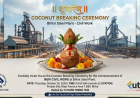
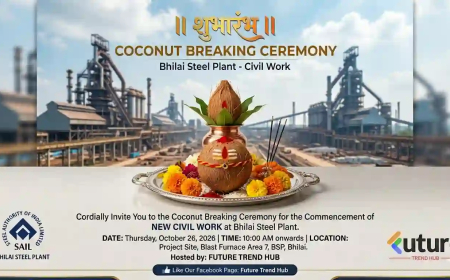
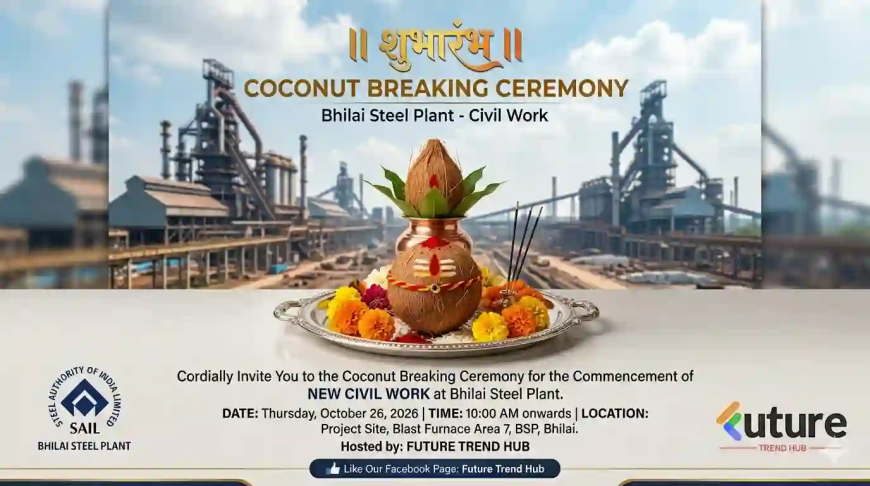
Prompt: Create a high-quality, professional invitation card for a Coconut Breaking Ceremony at a [e.g., Mechanical/Piping] Industrial Plant. The background features a clean, wide-angle cinematic view of an industrial site with steel structures and [e.g., large diameter pipes] in a soft-focus (bokeh) blur. In the foreground, a beautifully decorated coconut with vermilion (tilak) and kalash sits on a polished silver tray. The aesthetic should be a mix of "Engineering Precision" and "Traditional Auspiciousness." Use a professional color palette of Deep Navy Blue, Gold, and subtle Saffron. 8k resolution, studio lighting, photorealistic, premium corporate finish. The host is "Future Trend Hub", venue is Bhilai Steel Plant, Date & Time: 11 April 2026, also mention to like Our Facebook Page i.e. Future Trend Hub. and
Practical Examples: Prompts You Can Use Right Now
Let’s look at some industry-standard examples to get your brain moving:
-
For a Tech Launch: "Ultra-modern digital invitation, neon blue accents on matte black background, circuit board patterns in the corners, holographic typography, cinematic lighting."
-
For a Boutique Cafe Opening: "Hand-drawn watercolor style, pastel green and soft white, rustic wooden table background, sprigs of lavender, elegant cursive font, warm morning sunlight."
-
For a Real Estate Gala: "Luxury gold and marble theme, architectural line art of a skyline, heavy paper texture, sophisticated serif font, 8k resolution, photorealistic."
Pro Tips for the Expert Look
If you want to take things to the next level, here are a few things I’ve learned over the years:
-
Negative Prompting: If you find the designs are getting too "crowded," explicitly mention what you don't want, like "no clutter," "no messy lines," or "no bright yellow."
-
Aspect Ratio Matters: Always specify if you want a vertical (portrait) card for WhatsApp or a horizontal (landscape) one for printing.
-
Color Palettes: Use specific HEX codes or names like "Sage Green," "Dusty Rose," or "Midnight Blue" instead of just "Green" or "Pink."
Common Mistakes to Avoid
Even pros mess up sometimes. Here is what to watch out for:
-
Overloading the Prompt: Putting too many ideas into one sentence confuses the output. Keep it structured.
-
Ignoring Typography Space: Make sure your design has "white space." If the background is too busy, no one will be able to read the actual invite details.
-
Forgetting the "Human" Element: Sometimes these tools make things too perfect. Adding terms like "subtle paper grain" or "slight ink bleed" can actually make the card look more authentic and high-end.
Future Trends in Invitation Design (2026 and Beyond)
As we move further into 2026, the trend is shifting toward Hyper-Personalization. We are seeing a move away from generic templates toward designs that tell a specific story.
-
Motion Invites: Static cards are becoming "old school." The next big thing is prompting for short, 5-second animated backgrounds.
-
Eco-Friendly Aesthetics: Designs that mimic recycled paper, seed paper, and organic textures are blowing up as sustainability becomes a global priority.
-
Augmented Reality (AR) Ready: Designers are now creating cards with "scannable" areas in mind. The prompt focuses on leaving a specific clean zone where a QR code can sit without ruining the art.
FAQ: Real Questions from Creators
Q: Can I get actual text on the cards using prompts? A: While it’s getting better, text can still be tricky. The best way is to generate the "artistic background" and "border" first, then use a tool like Canva or Photoshop to add your specific event details in high-quality fonts.
Q: What is the best resolution to ask for? A: Always aim for "4K," "high-resolution," or "print-ready 300 DPI" in your description to ensure the details don't look blurry when you send them to a printer.
Q: Is it okay to use these for commercial client work? A: Absolutely! Many freelancers are now using these methods to provide faster mockups to clients. It helps the client "see" the vision before the final manual design work begins.
Q: How do I make the colors look exactly like they do on my screen? A: Real talk—screen colors (RGB) and print colors (CMYK) are different. Always do a test print. In your prompt, mentioning "muted tones" or "saturations" can help, but the final calibration happens at the printer.
Q: Can I create a whole set (Menu, RSVP, Thank You cards) that match? A: Yes! The trick is to keep your "Style Keywords" identical across all prompts. If you used "Gold foil and Eucalyptus leaves" for the main card, use that exact phrase for the RSVP card to keep the branding consistent.
Conclusion: Start Creating Today
Creating designer invitation cards isn't about having the most expensive software anymore; it’s about having the best ideas and knowing how to communicate them. Whether you are building a brand, planning a family event, or helping a client, these techniques will save you time and money while delivering world-class results.
Don't just read this—go try it. Open your prompt window, use one of the material-focused phrases we discussed, and see the difference for yourself. The more you experiment, the better your "eye" for design will become.
Key Takeaways:
-
Specificity is your best friend; describe textures and lighting.
-
Balance traditional motifs with modern layouts for a unique look.
-
Focus on "white space" to ensure the card remains functional.
-
Stay ahead of 2026 trends by exploring eco-friendly and minimalist aesthetics.
Related Articles
What's Your Reaction?
 Like
0
Like
0
 Dislike
0
Dislike
0
 Love
0
Love
0
 Funny
1
Funny
1
 Angry
0
Angry
0
 Sad
0
Sad
0
 Wow
0
Wow
0